

BLOG
Read about all things Charleston

Top Three Favourite Charleston Routines In Strictly History
With the return of Strictly Come Dancing’s 20th series this upcoming weekend, there is no better time to reminisce and look back over some the most iconic Charleston routines in Strictly history.
With the return of Strictly Come Dancing’s 20th series this upcoming weekend, there is no better time to reminisce and look back over some the most iconic Charleston routines in Strictly history.
Over the years, there have been so many Twenties-tastic Charleston routines that have a swivelled their way onto our screens and in some cases were even the winning dance-let’s look back over some firm favourites:
Stacey and Kevin: 2018 Semi-Final
First up on the list we have TV Presenter Stacey Dooley and Professional Partner Kevin Clifton who delivered a truly authentic Charleston during the Semi-Final back in 2018 and scored a well-deserved 39 from the judges. Let’s delve a little deeper into why this Charleston stood out over many others.
First and foremost, let’s start with the music. I, for one, absolutely love the tune, ‘Five Foot Two, Eyes are Blue’ and really feel it complements the routine as well as the whole 1920s Jazzy vibe that the Charleston is known for.
After a short opening of setting the scene, the storyline becomes apparent, and we see Stacey and Kevin play the role of an elderly couple reminiscing on their Charleston dancing days back in the 1920s.
After few bars of music, a flashback occurs and the pair spring into action. Charleston content is clearly already at the forefront of this routine; therefore, immersing the audience into the 1920s spirit and preparing us for the jammed packed Charleston adventure the couple are about to embark on.
From 0:21, the audience is immediately greeted with Flapper walks shortly followed by Tick Tocks, Birdie Flaps and Charleston kicks. At 0:33, we see the couple launch themselves into their first of many lifts. The syncopation of the pair throughout this section (and the dance as a whole) was executed to perfection which is one of the reasons as to why it is such an effective Charleston.
At 1:14, we see the pair perform a sequence of Suzy Qs and Helicopters, before their final lift. They then run back to their armchairs which transports the audience back to the present day.
The partnership between Stacey and Kevin was really effective and they both held so much passion for this routine which was lovely to see. Despite Stacey only being a novice dancer, she really epitomised the role of a 1920s Flapper. This, alongside the jam packed routine full of classic Charleston steps really captured the 1920’s flare and provided that authentic feel.
John and Johannes: 2021
Next up we have John Waite and professional Partner Johannes Radebe who made history being the first same-sex male couple to ever participate on the show. Their Charleston, which was choreographed by Jenny Thomas, was set in a French Bakery where they delivered a cheeky and entertaining number to the jazzy tune, ‘Milord’ by Édith Piaf.
It was established from the outset that this routine was going to be a whirlwind of 1920s fantasia with a touch of comedy.
After just a few bars of music, both John and Johannes break into what Anton called, “Baquette-ography,” swivel walks and a brief Can-Can sequence with immense gusto. At 0:50, the tempo of the song changes and for a few moments the pair are seen completing the basic Charleston step in slow motion which made it appear all the more impressive. The pace then quickened, and they went into a series of pushes, Tik-Toks, and Side-to-Side Charleston’s.
In true Johannes’ fashion the routine ended with a comical scene where John pushed a pie into Johanne’s face- therefore providing further entertainment for the audience.
The characterisation that both John and Johannes portrayed was phenomenal and routine included a mixture of solo steps and partner work as well as lots of Classic Charleston steps amalgamated with non-Charleston moves which provided a sense of originality. The choreography chosen for this routine was well suited to John’s dancing abilities making it all the more difficult to differentiate between Professional and Celebrity.
Overall, this Charleston routine received an abundance of positive feedback with very little criticism from both judges and the public audience. One of my favourite aspects of this routine and partnership as a whole was that it was a joy to witness a dance that is over 100 years old, being adapted to suit a modern and progressive world without losing it’s original 1920’s flare.
AJ and Kai: 2021
Finally, we have AJ Adudu and Kai Widdrington who took centre stage with their Charleston number set to the tune, ‘Don’t Bring Lulu,’ by the Dorothy Provine, Pinky, The Girls, back in 2021.
This routine was choreographed by Jenny Thomas, and it was nothing less than iconic. Many people, including myself, thoroughly enjoyed watching AJ and Kai’s Charleston; so much so that the only negative comments were directed at Craig’s scoring and not the dance itself.
The routine begins with both AJ and Kai dressed in their 1920s finery and in the first thirty seconds alone, the audience had already been greeted with an abundance of classic Charleston moves including, Swivel Walks, a lift, Kicks and Cakewalks. At 0:42, we see the couple launch themselves into a series of complex lifts which further enhanced the excitement of the already awe-inspired crowd. The routine then progresses into a perfectly synchronised sequence of 30’s Charleston, Suzy Qs, and a Waterfall, shortly followed by Knocky Knees and Truckin’. The pair then had just enough time for a quick shimmy before Kai lifts AJ into their final pose.
It was clear that AJ really was living her 1920s Flapper girl dream throughout the routine, and it was evidently noticed as Anton Du Beke compared her to, “Josephine Baker,” which might just be the highest compliment a Charleston Dancer could ever receive!
In the interview with Claudia Winkleman after their performance, AJ stated that she, “[had been] losing confidence in [her] abilities” and how the Charleston was a “physically challenging dance” so, “these comments from the judges have made it even more special as [she] now knows [she] can do anything.”
I can only imagine how many hearts were touched by AJ’s statements as they really do highlight the positive impact dance, (in particular the Charleston), has on so many people. Furthermore, it is a well-known fact that so many individuals struggle with their confidence and to believe in their abilities so watching someone like AJ dance in the way that she did, would have been incredibly inspirational to witness. I firmly believe that through this, she has encouraged so many people to follow their dreams. I think the fundamental message from AJ’s journey dancing the Charleston, is the idea that anyone can achieve anything if they put their mind to it and this is why AJ and Kai’s Charleston is my all-time favourite in Strictly history.
So, there we have it, my top three favourite Charleston routines. Which was your favourite? Let us know in the comments below as we’d love to hear your thoughts!
By: Eleanor O’Donnell

Charleston at Dzaleka refugee camp
One hour outside Lilongwe, the capital city of Malawi, is Dzaleka refugee camp. The camp is known for its incredible Tumaini festival held in November each year; Tumaini means 'hope' in Swahili and this is definitely what I experienced when I held a Charleston dance taster class there.
One hour outside Lilongwe, the capital city of Malawi (a country of twenty million in Southern Africa) is Dzaleka refugee camp. Originally built in 1994 to home 10,000, the camp now holds over 50,000 refugees and asylum seekers, mostly from the Democratic Republic of Congo, Ethiopia, Burundi, and Rwanda. The camp is known for its incredible Tumaini festival held in November each year; Tumaini means 'hope' in Swahili and this is definitely what I experienced when I held a Charleston dance taster class there.

Some of the refugees generously shared stories of how they were forced to leave their homes as children, without knowing where their parents are, if they are still alive and if they could ever find them again. They explained how they are not legally allowed to work in Malawi so instead 'volunteer' for a stipend or trade services and skills. Fire (our host, whose name definitely mirrors his dancing skills!) told us how important the arts are for people in the camp. He volunteers with the refugee-established Dzaleka Dojo, a group who support the refugees to be physically and mentally healthy. They have a team of trained yoga teachers, as well as karate, ballet and acrobatics classes. The age range in the room was beautiful to see; young children dancing alongside their parents and elders.

"Most refugees passed through overwhelming situations such as conflicts, wars, violence and death. In the same camp, refugees may live with the very people who caused violence in their home countries and made people flee. Our activities are inclusive; everyone can join us regardless of their background. When refugees meet together it builds a peaceful coexistence and allows them to collaborate and foster compassion."
I loved how his ethos reflected what I learned from my dear friends at MyCharleston. I spent two wonderful years dancing with Elena and Fiona in Brighton and over Zoom and it is amazing to see their focus on mental health and the positive social impact of dance reflected in such a different context here in Malawi.

I wish everyone could experience dancing the Charleston with this group of refugees; their whooping, posing and facial expressions would show Josephine Baker a thing or two! I am also joining the MyCharleston team of teachers and starting classes in the capital city- Lilongwe, where I live- but I think the highlight of my teaching experience will be visiting this talented crew of dancers and performers.
Thank you to Fire, Elena and Fiona for inspiring me!
Written by Rachel Dixon
To find out more about Rachel’s work in Malawi, please visit her Facebook page

The Shorty George
We have collected various videos of The Shorty George from some of the founding members of the Solo Jazz and Lindy Hop movement along with contemporary dancers to see how the move has been stylised since it’s inception to help you practice the step.
The Shorty George is a classic dance move that appears in Solo Jazz and Lindy Hop. The name derives from the African -American Lindy Hop dancer “Shorty” George Snowden (4 July 1904 – May 1982) who devised the step to add comedy to his Lindy Hop dancing. With his partner, Big Bea, the couple would use their difference in height to comic effect and his signature walk was born in the 1930s
There is little footage of the original move but we have collected various videos of The Shorty George. From the founding members of the Solo Jazz movement to contemporary dancers, you will see how it’s been stylised since its inception and evolved to help you practice.
Full breakdown of the Shorty George with Frankie Manning
Frankie Manning is considered one of the founders of Lindy Hop along with George Snowden and many other dancers from the Savoy Ballroom from the 1930s. This is the perfect place to start if you want to learn the step from one of the founding members of the Lindy Hop and Solo Jazz genre. In this clip from 1995 Frankie Manning and Erin Stevens break down the step in their tutorial of the Shim Sham routine from 34 mins into the video. Frankie in this video is around 80 years old and still dancing!
Fred Astaire & Rita Hayworth’s tribute to the Shorty George through Tap Dancing
Taken from the film You Were Never Lovelier, this is an interesting clip as we see the move not only transitioning into Tap Dance but also becoming a mainstream move and popularised by one of the most famous dancers in modern history, Fred Astaire.
Remy Kouakou Kouame and Ryan Francois
Jumping forward to the modern day, we still see the move performed in music videos. In this video dancers Remy Kouakou Kouame and Ryan Francois pay tribute to two other original dancers from the Savoy Ballroom Al Minns and Leon James. These dancers show off many Solo Jazz and Charleston steps with perfect precision including the Shorty George at the end of the film.
Ksenia Parkhatskaya
Ksenia Parkhatskaya is one of the best known Jazz & Swing Dancers on the circuit today and has put together her own tutorial of the Shorty George which gives another perspective on how the move can be stylised.
MyCharleston and the Shorty George
If you need some help to start practicing the move, here is Elena from MyCharleston drilling the Shorty George. Why not try dancing along with her?
We would love to see your own interpretation of the Shorty George so please email us at hello@mycharlestondance.com any clips you want to share with us.

Charleston Dancing in the Park
A great way to dance and reconnect with our wonderful community. The dance will be £5 with 45 mins of Charleston dance session with Morgan
Join us for a fun dance in the park on 4th September, 11am at St Ann’s Well Gardens, Hove.
A great way to dance and reconnect with our wonderful community since our summer break. Also a great way to try out the Charleston if you’re thinking of joining one of our September courses. The session is suitable for all levels, including beginners and no partner required.
The Charleston dance session will last approx 45 mins with teachers Morgan and Elena.
£5 per person. Please bring cash or card on the day.
If you would like to attend please add your name to the list here:
https://forms.gle/xZNJ3KDFWGairjtMA

Videos: Watch the Autumn Routines
Join us on one of our next courses starting in September. Charleston to the Walkin’ Blues, dance like a Bad Guys with our musicals course, learn our new routine to dance Beyonce’s Single Ladies routine or learn some advanced moves from the 1920s in our Intermediate course.
We are so excited to be back in the studios and online with our new routines from 12th September!
Charleston to the Walkin’ Blues or dance like Bad Guys with our new Bugsy Malone musicals course. Learn Beyonce’s Single Ladies at Street Jazz or some 1920s advanced moves in our Smooth Sailing Intermediate Charleston course.
CHARLESTON COURSE - THE WALKIN’ BLUES
We’re excited to be teaching this routine again. A fun and upbeat routine to The Walkin’ Blues - a jazzy tune inspired by 1930’s Charleston.
BRIGHTON & HOVE LEWES WORTHING PORTSMOUTH ONLINE
Course Dates:
Brighton: Charleston Course. Monday 12 Sept - 17 Oct, 7.30 - 8.30pm, The Dance Space
Hove: Charleston Course. Tuesday 13 Sept - 18 Oct, 6-7pm, Open Space Studio
Hove: Charleston Course. Thursday 15 Sept - 20 Oct, 10.30 - 11.30am, Open Space Studio
Lewes: Charleston Course. Tuesday 13 Sept - 18 Oct, 6.30-7.30pm, The Body Workshop
Portsmouth: Charleston Course, Tuesday 13 Sept - 18 Oct, 7.30-8.30pm, Kings Church
Worthing: Charleston Course. Wednesday 14 Sept - 19 Oct, 7-8pm
Online: 6 week Charleston Course. Open Level via Zoom. Monday 12 Sept - 17 Oct, 6pm BST
MUSICALS COURSE - BUGSY MALONE BAD GUYS
A new routine for our musicals course this term. Inspired by the choreography from Bad Guys in Bugsy Malone, this one will be a lot of fun and we’re looking forward to teaching it. Get those suits and newspapers at the ready!
HOVE ONLINE Portsmouth
Online: 6 Week Musicals Course via Zoom. Monday 12 Sept - 17 Oct, 7pm BST
Hove: Musicals Course. Tuesday 13 Sept - 18 Oct, 7-8pm
Portsmouth: Musicals Course, Wednesday 14 Sept - 19 Oct, 7.30-8.30pm, Eastney Community Centre
STREET JAZZ - BEYONCE, SINGLE LADIES
We’ve only taught this routine online so we’re really excited to be teaching it in studio. Although released over 14 years ago, this song is still such a hit today and we’ll be teaching all the iconic moves and attitude from it which makes it so fab to dance to.
Hove: Street Jazz Course. Thursday 15 Sept - 20 Oct, 6-7pm, Open Space Studios
BOOK NOW
INTERMEDIATE CHARLESTON - SMOOTH SAILING
On our next Intermediate Charleston course we'll be teaching a solo jazz classic - Smooth Sailing - fun and a real joy to dance.
Hove: Intermediate Charleston. Thursday 15 Sep - 20 Oct, 7-8pm, Open Space Studios
BOOK NOW

Our Summer Routines 2022
you can now view our Summer performance videos. Well done to everyone who danced, especially in the heat!
you can now view our summer performance videos. Well done to everyone who danced, especially in the heat!
Charleston Open Level - In the Mood
This fantastic Charleston routine combines 20's and 30's Charleston style with classic solo jazz moves. We have a full playlist of 8 different classes performing the routine in studio and on Zoom.
Charleston - Intermediate Level - The March Band
This routine captures the playful, cheeky style of the Charleston dance. In the routine the dancers take on the characters of clockwork toys in a marching band, they finally wind down at the end of the piece!
Musicals ‘Mein Herr‘ Cabaret
A powerful and sensual chair dance which takes inspiration from Bob Fosse's dance routine Mein Herr. This routine was performed by our Musicals group in Brighton.
Bookings for our Autumn are now live! You can view all the upcoming routines and dates on our class page below.
Born This Way - Street Jazz Routine
This punchy and powerful dance routine was choreographed by Fiona as performance piece at Also Festival. She wanted to express the anger, joy and sense of liberation which the lyrics evoke. This routine was performed by our Street Jazz group in Brighton.
Next Term
We've been busy in the studio preparing our next 4 routines starting in September and we are happy to share that the following course routines are:
Open Level Charleston - Walkin' Bllues
Intermediate Level Charleston - Smooth Sailing
Musicals - Bad Guys, Bugsy Malone
Street Jazz - Single Ladies

Become a MyCharleston teacher
We are excited to announce our online teacher training course for 2022 is OPEN! Fancy running MyCharleston classes in your area or think a friend would make a great teacher? Get in touch, we want to hear from you!
We are excited to announce our online teacher training course for 2022 is OPEN! Fancy running classes in your area or think a friend would make a great teacher? Get in touch, we want to hear from you!
After a successful year of training seven new MyCharleston Licensee teachers across the UK and overseas we now have new classes in Devon, Darlington, Nottingham, Cleethorpes, as well as Italy and Holland!
The 8 week teaching course starts from 23 September and if you are one of the first 3 people to sign up you get £100 off the course, making it just £300 to train with us.
By becoming a MyCharleston Licensee you can make money from something you love, expand your knowledge of dance and diversify your career.

WHY TEACH THE CHARLESTON?
You can bring to your local community:
A joyful experience that will improve peoples mood, fitness levels and coordination
A quirky dance which brings the Golden Age of Jazz to life
Dance classes for everyone regardless of age or level

'One of the things I love most about teaching with MyCharleston is how you get to work alongside the most incredible people. There is also unfaltering support that is provided to everyone who walks through the door, whether that be a student or a teacher.'
Eleanor, MyCharleston teacher in Nottingham
IS THIS COURSE FOR YOU?
We welcome applications from all backgrounds. Whether you are an amateur dancer looking to turn your passion into a business or an established fitness professional wanting to offer more to your current clientele.
Apply now and join our fantastic group of teachers who are bringing Charleston dancing to their communites.
if you have any questions, please do not hesitate to contact us for more details at hello@mycharlestondance.com

The 20s Flapper Dress - The scandalous dress that empowered women
In the 1920s the flapper dress was a staple piece of clothing in every woman’s wardrobe. It enhanced their figures, allowing them to move freely to dance but those who wore it was also viewed as reckless partygoers…
There have been many iconic styles of fashion throughout the decades in history. We have all heard of Dame Barbara ‘Mary Quant’ and her 1966 creation of the mini skirt and Regency Ballgowns from Jane Austen’s novels. However, there is one piece of clothing that often gets forgotten about amidst the millions of other styles. An outfit so revolutionary it went down in history and became a staple piece in every woman’s wardrobe for over 10 years.
Yes, you guessed it! We can be talking about none other than the 1920s Flapper Dress…
As we are returning once again to the ‘20s, fashion from the decade has made quite the come back with more and more people falling in love with the whole style and vibe. So, let’s find out why this dress is so iconic…
What is a Flapper Dress and why is it widely recognised?
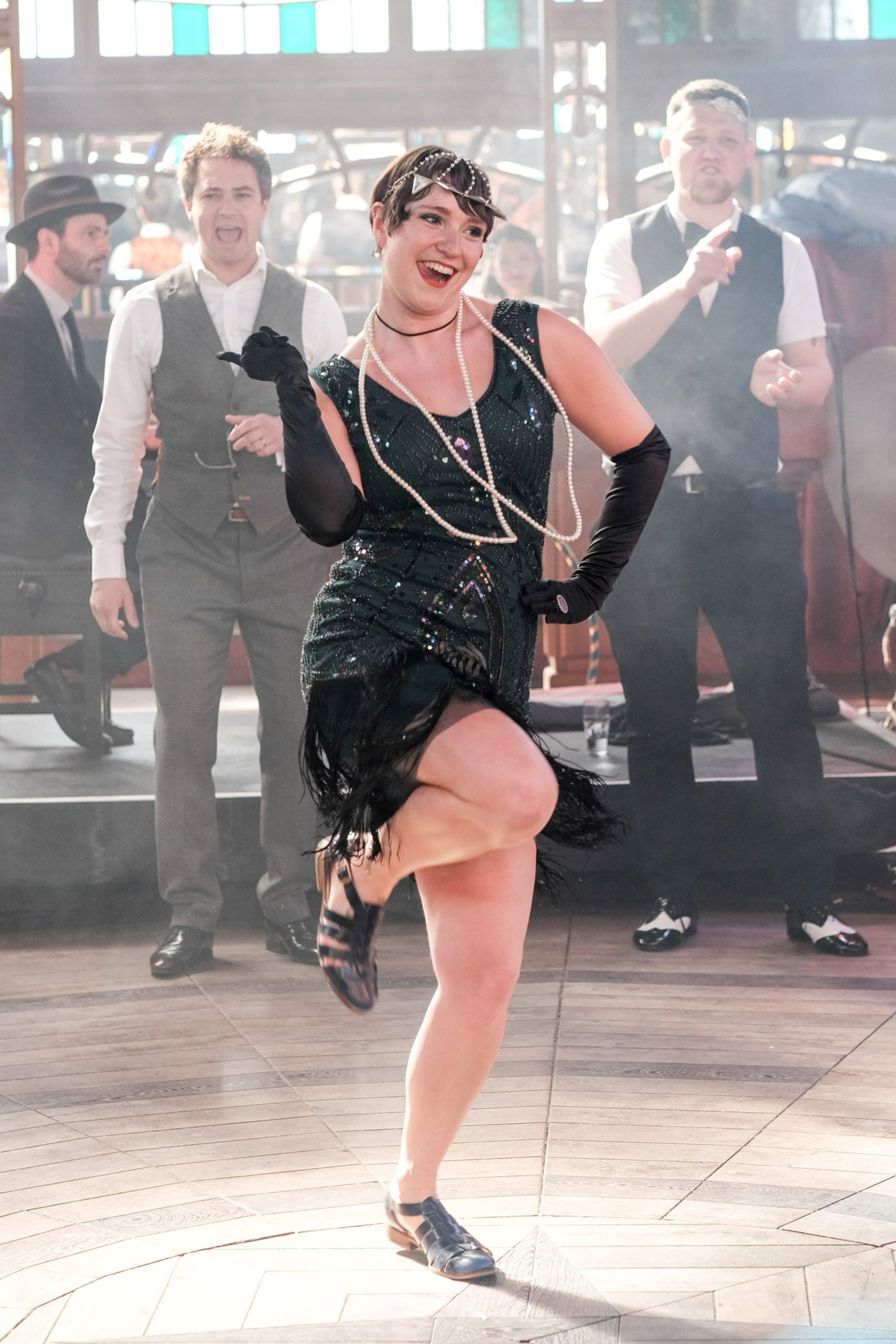
During the turn of the century, fashion was changing as women were gradually moving away from the suffocating corsets and stiff, long skirting in favour of a style which enhanced their figures as opposed to restricting them. The Flapper Dress ignited this change as it is relatively simple in terms of style and came to just below the knee in length (scandalously short for the time).
The silhouette in the 1920s was known as, ‘la garçonne’ which illustrated the youthful figure which was desired by many women throughout the ‘20s. Suddenly, women’s fashion was not about maintaining high levels of, ‘modesty’ and instead it became about empowering women to take control and physically break free from the societal constraints and pressures to conform to the rules of the ‘traditional woman’ in an attempt to abolish the idea that they should dress for their husbands.
The Development of The Flapper Dress Throughout the Decade:
Dressing up was once a restrictive activity and one that richer women in society were permitted to participate in. This was due to the overly expensive and Avant Garde embellishments that were added to many outfits and accessories. However, the 1920s made the act of dressing up more accessible as the Flapper Dress could easily be made at home, thanks to its simple structure and the eradication of the corset.
During the early years of the 1920s, the concept of the ‘Flapper Dress’ was beginning to form. This led to women being viewed as reckless as they drank, smoked, and danced the decade away. With waistlines dropping below the hip and hemlines slowly creeping up to above the knee, by 1925, the previous Victorian style of dress had been forgotten about and short, simple Flapper Dresses were the new, notable look. However, by the end of the decade, the idea of shorter hemlines crashed, as did Wall Street, and the fashion industry decided to return to the glamorous and curvaceous silhouette in the early 1930s.
What makes a Flapper dress
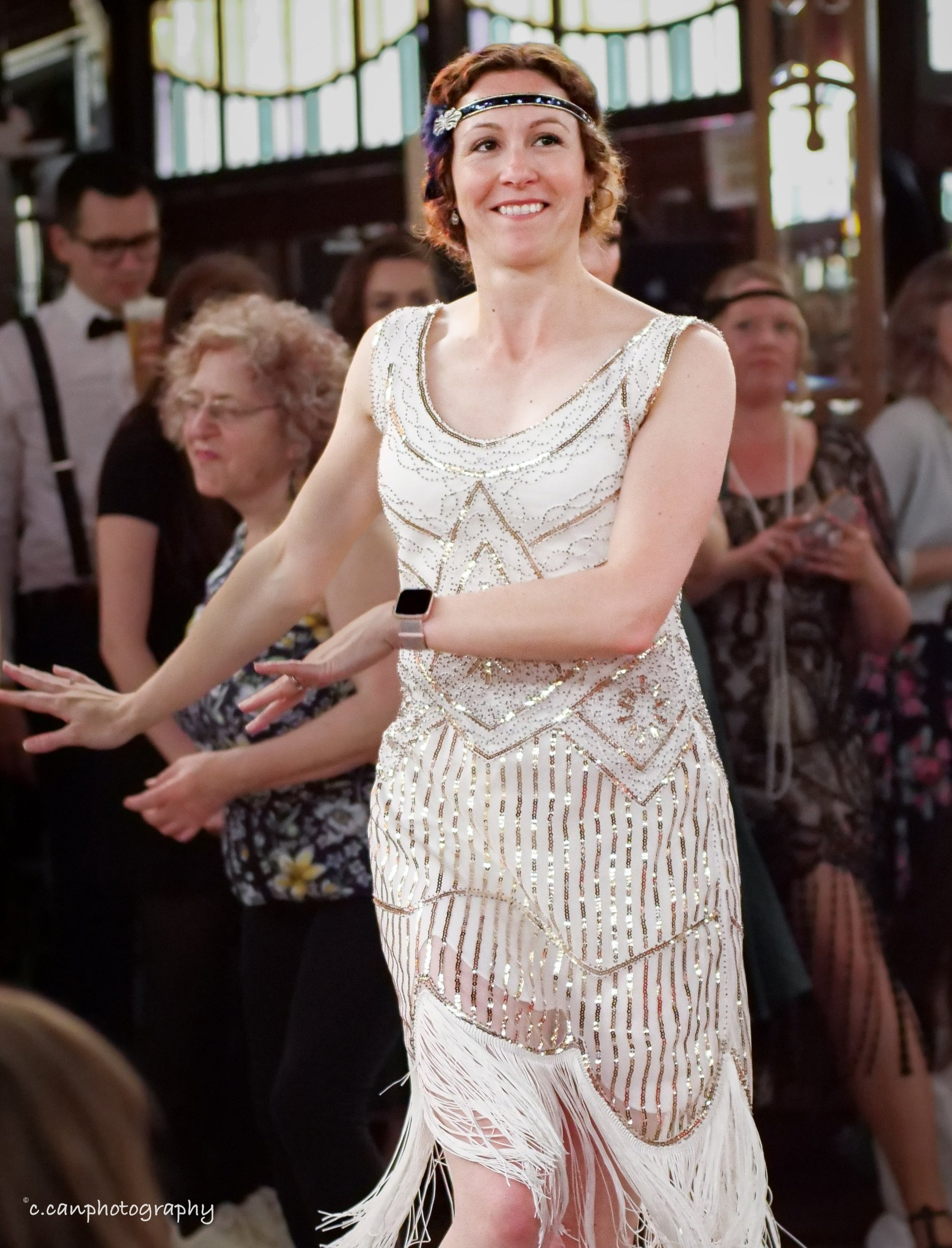
There are many specific characteristics that define a Flapper Dress and make it so recognisable- even today! They generally hang straight down the body with an uneven split hem, were sleeveless and most importantly were made out of light, loose fabrics. This not only allowed for dances such as The Charleston to be danced with ease, but it also revitalised body confidence in women.
For added pizzazz and glamour, many adorned their dresses with beading or sequins sewn into intricate designs as well as wore accessories such as pearls, feathers, and facemasks.
Famous Flapper Dresses
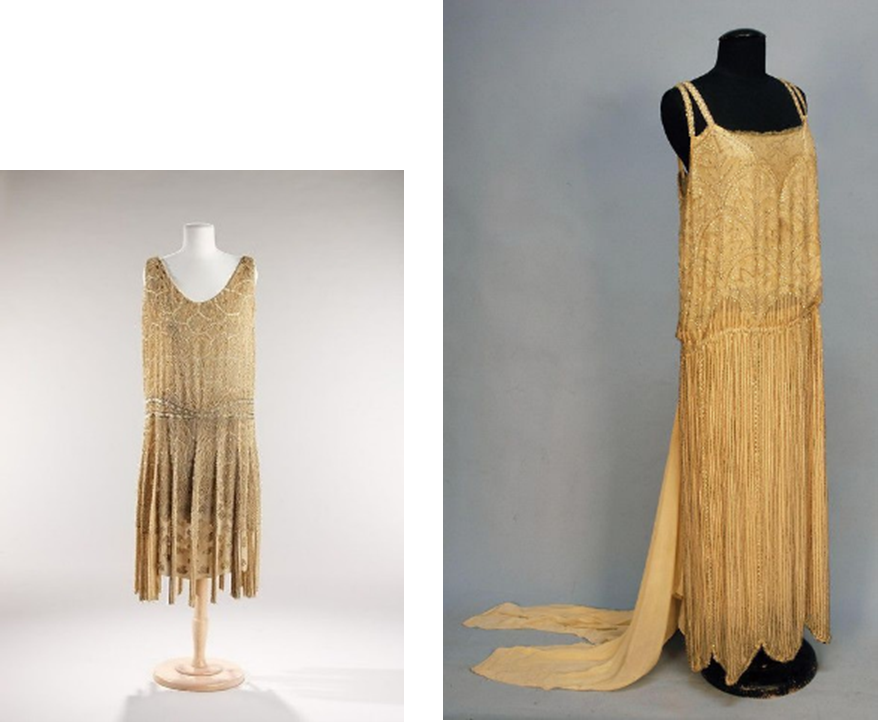
Like many other vintage eras throughout history, the 1920s was no different when it came to showcasing the iconic fashion that was prevalent during this time. The well-known designer Edward Molyneux was among the many to create a dress so ‘flapper-tastic’ that it went down as one of the most iconic in history. Molyneux was an extremely prestigious fashion designer throughout the decade. He created many elegant evening-wear Flapper Dresses that became a popular choice in elite social circles, even becoming first choice with many actresses and stage performers; including Greta Garbo. His imaginative creations were among the first to incorporate unconventional patterns using crystals or beading as well as experimenting with ostrich feathers and comically shaped buttons. His extravagant designs led him to open multiple fashion houses throughout Paris where he became a style trendsetter.
One of his most famous pieces of work was a 1925 Flapper Dress which perfectly encapsulated what the 1920s was all about. The dress symbolised glamour yet was minimalistic in terms of style. This particular dress became a statement piece and was used to set an example to this new, growing fashion trend.
Flapper Dresses in the Modern Day
The Flapper Dress is a style that is still very much associated with the 1920s, however, that hasn’t stopped it regaining popularity 100 years on. This style of dress has become a common choice for vintage fashion collectors and as a result, these dresses are now considered an ‘investment fashion piece.’
They have also become the fancy-dress must-have when throwing a vintage themed party.
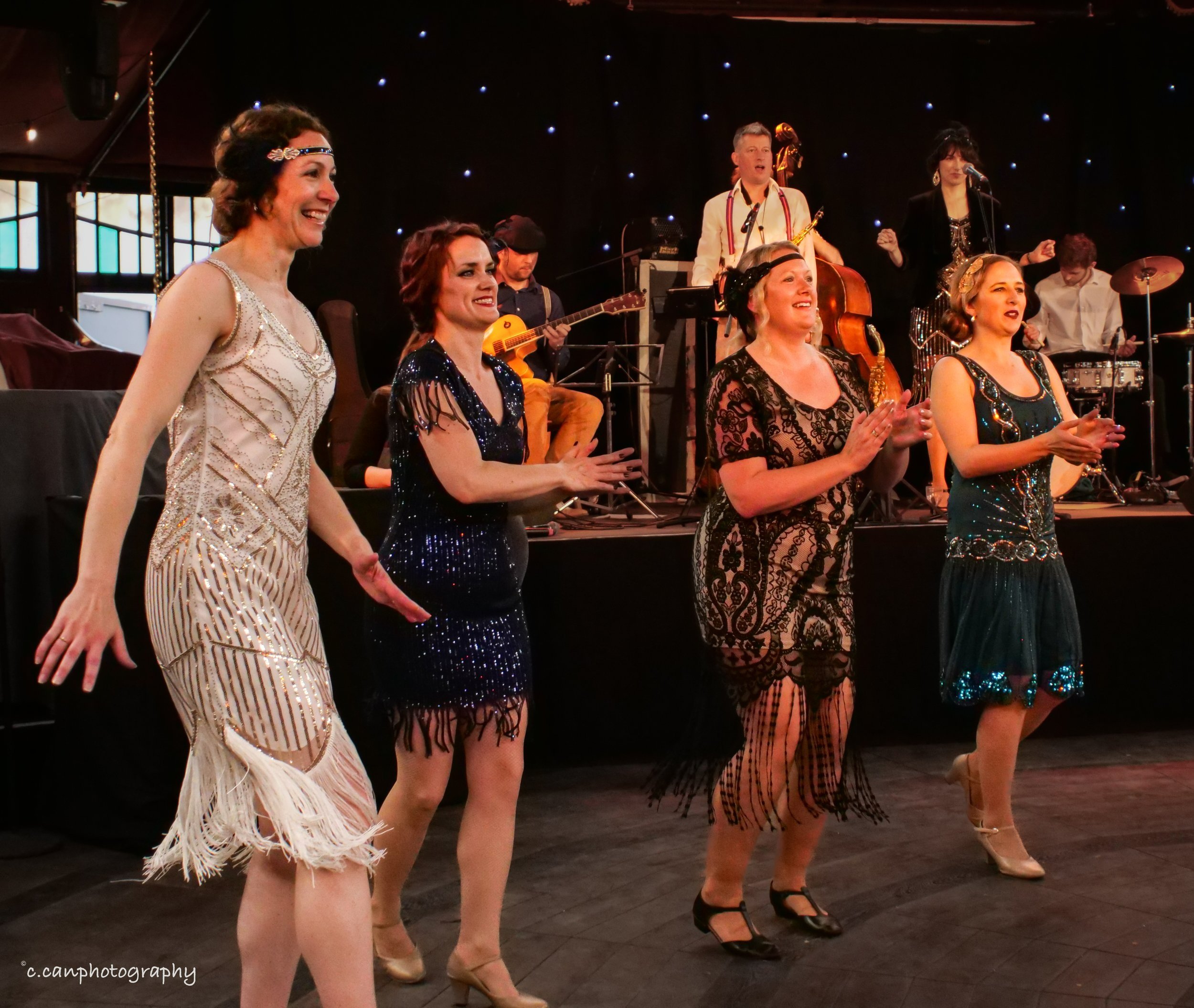
Over the years, MyCharleston have also seen and worn some stunning 1920s outfits at our annual Speakeasy. Ranging from full blown Flapper to Swing Dresses; there really are so many amazing styles that stem from the 1920s.
With all the tassels, sequins, beading and pearls, I think it’s safe to say that the legacy of the Flapper Dress still lives on and will hopefully continue to do so. After all, this historical style of dress is certainly one of a kind…
By Eleanor O'Donnell

Lady Gaga, Medusa and Also Me
When you are given a creative brief, you know you are going to go on a journey of discovery. My latest project ‘Raising Medusa’ has taken me on a journey which was as much about self-discovery as creating a dance piece.
When you are given a creative brief, you know you are going to go on a journey of discovery. My latest project ‘Raising Medusa’ has taken me on a journey which was as much about self-discovery as creating a dance piece.
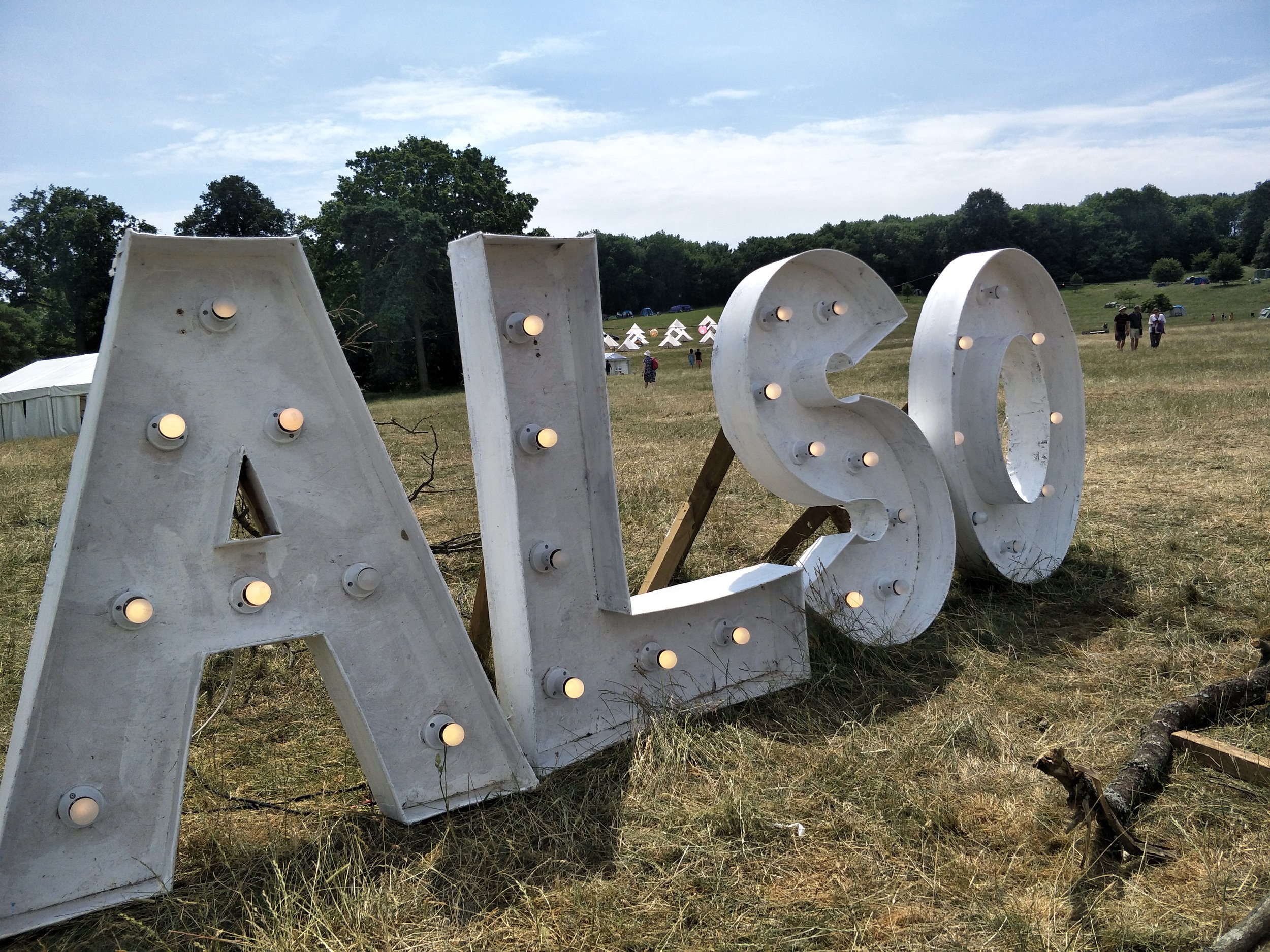
Back in March, Helen Bagnall, creator of Also Festival asked if I would like to choreograph a dance as part of a spectacle to celebrate Medusa. It’s a collaborative piece and anyone attending the festival, or our next Street Jazz course can take part in the performance.
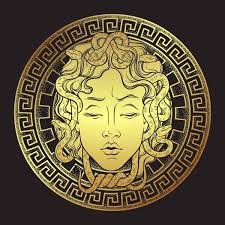
The project takes its inspiration from the work Natalie Haynes has done, to bring Medusa back into the light. It is a celebration of this mythical woman, and the dance will be accompanied live by the London International Gospel Choir who will be singing Lady Gaga’s Born This Way.
We want as many people as possible to participate in the piece, so I have choregraphed the dance in sections. The Chorus is simple to learn and dance, it has this fantastic ‘wild rumpus’ feel when you do it. I took these moves from the original choreography Lady Gaga dances, her raw energy and the way she lays herself bare has been an inspiration.
The dance moves perfectly embodies the energy of Medusa showing her true self, not as a monster but as a powerful women. To me, Medusa is a mask and in these simple dance moves she allows herself to express her anger, joy and sensuality with abandonment.
The energy of this dance is more important than the steps themselves. Each and every one of us who do this, should see themselves as Medusa. When we dance, I want us to remove the mask of who we think we ought to be and go wild as we celebrate who we really are. We are celebrating Medusa; we are celebrating being ‘Born This Way’
If you are to define what dance is, then I would say it is abandonment. It takes courage to dance in public and I was truly inspired by the people who took part in last year’s dance project at Also. Now known as the “Kylies” we all performed a dance to the song “Spinning Around”. I had created four short videos so people could learn it at home ready to perform on the day.
When I meet the dancers who had taken on the challenge it was really awe inspiring, they were so dedicated they actually knew the routine better than me! Just before we went on stage we had a shot of Tequilla, this was a first for many people and we were performing on the main stage. The crowd loved us and the thrill everyone felt afterwards was incredible we had all bonded in such a short time through this experience.
Helen’s concept for this year’s piece will build on what we did so successfully last year and take it to the next level as we expand the collaborative element. I am already hearing from last year’s group how much they are enjoying learning just a little bit each day. I can’t wait to see them again and meet even more people who are up for taking a risk and discovering the rewards of dancing together.
If you would like to give it a try view the video below where you can learn the Chorus to this dance routine.
To find out more about our up and coming Street Jazz course in which you can learn the full routine visit https://mycharlestondance.com/dance-brighton-hove/street-jazz

Get the Look: 1950s Make-up and Hair
With the Queen Jubilee Celebrations coming up and everyone looking back at the fifties, here is a handy guide with some easy ways to recreate the most popular looks from the decade.
The 1950s, or the ‘Golden Age,’ as it was otherwise known, marked the beginning of the Post-War era. What with World War II and the Great Depression becoming a distant memory, people revelled in this newfound sense of freedom. The ‘50s were a time of social change where civil rights began to be considered, pop culture defined identities and rock and roll dominated the music world. In 1952, the Coronation of Queen Elizabeth II took place which sparked a sense of hope for the people of Britain and a brighter future seemed possible. This, alongside their new disposable income and the encouragement from the media, sparked a dramatic change within fashion and beauty industries, which became revolutionary for 1950s women.
With the Jubilee Celebrations coming up and everyone looking back at the Fifties, here is a handy guide with some easy ways to recreate the most popular looks from the decade.
MAKE-UP
The 1950s saw the introduction of the Avon which led to a huge increase in accessible make-up and beauty products. With beauty standards higher than ever before, 1950s make-up looks are among the most iconic in recent history.
The Lips:
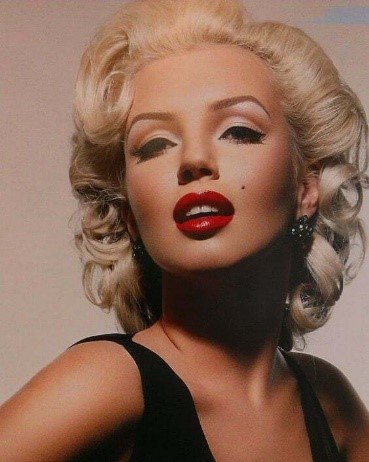
Although the use of make-up was on the rise, a more subtle look was favoured.
To recreate the lips, you should start with an application of foundation to ensure a smooth and neutral base. Then, add lip liner. It was common in the 50s to extend the natural border of your mouth using the liner- it was thought this made women appear more feminine. Then add your lipstick of choice. Unlike the 1920s, where there was only one lipstick shade, the 1950s had a wide selection, with pinks and oranges being popular amongst blondes and redheads and darker reds/purples with brunettes.
The Eyes and Cheeks:
Eye make-up in the 50s was minimal in comparison to previous decades. A dash of a pinkish eyeshadow was applied to the top lid alongside a few coats of black mascara. A softer application of eyeline was also popular, with the arch and wing kept very close to the eyelid.
Pastel pink blusher, or rouge as it were called, was applied to the apple of the cheeks, and went no further than the tip of the nose to accentuate the cheekbones. Blusher was also applied to the outer edge of the eyebrows to highlight the prominent arch and add definition.
HAIR
Celebrity culture was on the rise and with leading ladies such as Marilyn Monroe and Jayne Mansfield at the forefront, 1950s women were desperate to try out this trademark look. In the 1950s there were many different types of hairstyles, but the most popular ones were ponytails with a short fringe and a scarf bouffant.
Scarf Bouffant:
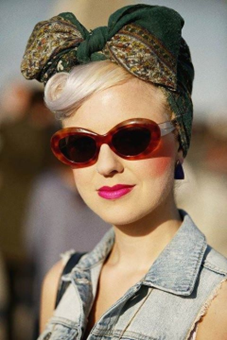
To recreate this hairstyle, you will need hairspray (and a lot of it), bobby pins and a head scarf; preferably nylon or a silk-like material. The good thing about this style is that the scarf can hide a multitude of imperfections so don’t worry if it is a bit messy!
To begin, start by parting your hair at the top, as if you were going to cut in a fringe, and roll this parted section towards the centre of the hairline, just above your forehead. Secure this with a few bobby pins (this will be altered later so don’t worry about it looking perfect!)
Now let’s focus on the remaining hair. Push the rest of your hair behind your head, as if you were going to put it up in a low ponytail and split it into two sections: a top and a bottom. Take the top section and tie it into a side ponytail to keep it out of the way- you will return to this later.
Next, take the bottom section and twist it on top of your head and secure with bobby pins along the back of your head, (make sure to leave enough hair on top of the head to backcomb later). Hairspray this section and begin to backcomb- moving the brush in a repeated, downwards motion towards your scalp.
Once this has been completed, remove the hair from the side ponytail and repeat the backcombing process with this section. Once all hair has been backcombed, lightly brush the hair from the front to smooth out any bumps or stray hairs.
Now scrape back all of your hair and begin pinning the ends to the back of your head- it should look like a low, messy bun. Spray this with further hairspray.
Now, back to the front section from earlier. Remove the pins and split into two sections and backcomb with more hairspray. Then roll both sections towards your front hairline, but this time pin it just off centre.
Finally, its time to add the scarf. Wrap the scarf around the back of your head and tie it just behind the pinned front section and spray with hairspray.
In the YouTube tutorial below explains in further detail how to achieve this iconic, 1950s hairstyle!
DRESS
With war-time clothing and the occupation of, ‘The Land Girl’ now a thing of the past, women’s fashion became more impractical as, ‘The New Look’ was introduced; making it impossible to participate in manual labour. This, therefore, reintroduced what is now commonly known as the ‘50s Housewife.’
A common stye of 1950s dress used pinched-in waists, a fitted top half and a full skirt which came to just below the knee (SHOCK!!).
The colour palette of clothes was also a big change in the 1950s. Work attire, such as tailored suits and pencil skirts, showcased block colours with very little detail. However, dresses, such as the iconic Rockabilly swing dress, were fashioned with a multitude of patterns and prints such as stripes, spots and florals which ran in just about any colour combination imaginable.
DANCE
Now you have perfected your 1950s hair, makeup, and dress you’re now ready to party!
Like many decades throughout history, dance was one of the main forms of entertainment. The ‘50s introduced an updated version of swing dancing, which adapted dances like the Waltz and the Charleston, in order to accommodate to the rock and roll music of the time.
So, what was famous about dancing in the 1950s? Well, the word ‘Bop’ was introduced and pretty much all styles were called as such. This phrase referred to a family of low swivelling, Charleston-like steps which were sometimes danced with a partner.
Fiona will be teaching a ‘50s style workshop at Roedean School on Friday (27th May) and she discovered a couple of videos which will help you get into the 1950s dancing spirit!
The first shows classic Fifties moves, and you can clearly see the influence of the Charleston.
The second one is amazing! It really shows urban dance moves in a style which encapsulates the energy of the original ‘Bop’ dance!
If you know of any great routines old or new which capture this decade of dance, please do share them with us!!
Now you’ve got the full 1950s look and dance moves to match, why not check out the playlist below which is full of great tunes to get those feet ‘Bopping’ to transport you back to the ‘Golden Age’…
By: Eleanor O’Donnell